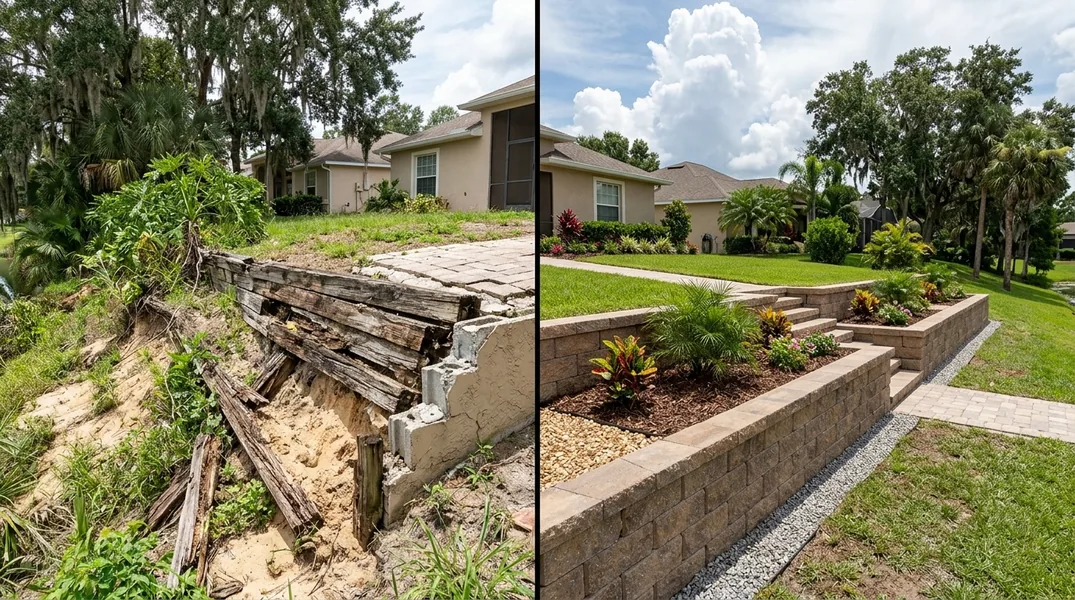
Why Leaning Retaining Walls Are a Serious Warning Sign
A retaining wall that leans is more than an eyesore. It is a structural warning that the wall is no longer doing its job of holding back soil. In Orlando, where heavy summer rains and sandy soil are common, even a slight tilt can quickly worsen. The lean usually means the wall has lost its base support, the drainage system has failed, or the soil behind it has become saturated and is pushing outward with tremendous force.
Ignoring a leaning wall is risky. It can collapse suddenly, causing injury, property damage, or costly erosion. The good news is that not every leaning wall needs to be torn down. Sometimes a targeted Retaining Wall Repair can stabilize the structure and extend its life. The key is knowing when repair makes sense and when replacement is the safer investment. This guide will help you understand the signs, the options, and what to expect.
Common Causes of a Leaning Retaining Wall in Orlando
Understanding why your wall is leaning helps you choose the right fix. In Central Florida, the most frequent culprit is poor drainage. When water cannot escape through weep holes or a proper backfill of gravel, it builds up behind the wall. The saturated soil becomes heavy and exerts hydrostatic pressure that can push even a well-built wall out of plumb. Our afternoon thunderstorms can dump inches of rain in an hour, so drainage is critical.
Other causes include an inadequate footing, tree roots growing under or behind the wall, and gradual soil settlement. In older neighborhoods around Winter Park, we often see walls that were built decades ago without modern drainage or reinforcement. Concrete Retaining Walls can also crack and lean if the original pour was too thin or if the soil beneath the footing has eroded. Identifying the root cause is the first step in any repair plan.
Repair or Replace? How to Decide
The decision between repair and replacement depends on the extent of the damage. If the wall is leaning less than a few inches, the footing is still intact, and the cracks are minor, a repair may be viable. Techniques like soil anchoring, helical tiebacks, or rebuilding the drainage system can pull the wall back and stabilize it. Retaining Wall Repair is often faster and less expensive than a full rebuild, but it only works when the wall's core structure is sound.
On the other hand, if the wall is leaning significantly, has large horizontal or stair-step cracks, or is bulging, replacement is usually the smarter choice. A wall that has already failed structurally will likely continue to move even after a patch. Retaining Wall Replacement gives you a new, engineered system with proper drainage and a fresh lifespan. For homeowners in Kissimmee and across the region, we recommend a professional inspection to make the call. A trained eye can spot hidden issues like a compromised footing that a homeowner might miss.
Retaining Wall Crack Repair: What It Can and Cannot Fix
Cracks are one of the most common reasons homeowners call us. Not all cracks mean the wall is failing. Hairline cracks in concrete are often cosmetic and can be sealed to prevent water intrusion. However, cracks wider than a quarter inch, or those that run horizontally or form a stair-step pattern in block walls, are red flags. These often indicate movement or settlement. Retaining Wall Repair for cracks may involve epoxy injection, patching, or rebuilding the affected section.
It is important to understand that crack repair alone does not fix the underlying cause. If the crack was caused by water pressure or a failing footing, sealing the crack without addressing the drainage or support will just lead to new cracks later. A proper repair includes evaluating the entire wall system. For minor cracks, we can often restore the wall's appearance and water resistance. For major cracks, replacement may be more cost-effective in the long run. If you are unsure, schedule a free estimate and we will give you an honest assessment.
Retaining Wall Replacement: When It Is the Best Investment
Sometimes replacement is the clear winner. If your wall is more than 20 years old, has multiple failure points, or was never built with proper drainage, a new wall will save you money and headaches. Modern Retaining Wall Installation includes geogrid reinforcement, gravel backfill, and perforated drain pipes that handle Orlando's heavy rains. A new wall also comes with a warranty and the peace of mind of knowing it was engineered for your soil conditions.
Replacement does not always mean a higher pricing than repeated repairs. If you have already paid for two or three repairs, the cumulative cost can exceed a new wall. We help homeowners in Sanford and throughout the area compare the long-term value. Our team can walk you through material options, including concrete, block, and timber, and explain which fits your budget and landscape. Call (407) 955-9875 to discuss your project.
Retaining Wall Repair Near Me: Finding a Trusted Pro in Orlando
When searching for "retaining wall repair near me" in Orlando, look for a contractor with local experience and a portfolio of completed walls. Retaining walls are not a generic handyman job. They require knowledge of soil mechanics, drainage, and local building codes. A professional will inspect the wall, identify the cause of the lean, and present you with repair and replacement options, not just one high-pressure solution.
Orlando Retaining Wall has been helping homeowners across the region protect their properties for years. We offer transparent pricing, detailed written estimates, and workmanship that stands up to Florida weather. Whether you need a small crack repair or a full wall replacement, we are here to help. Contact us today at (407) 955-9875 or request a free estimate online. Do not wait until a leaning wall becomes a collapsed one.
Looking for a professional retaining wall contractor in Orlando? Orlando Retaining Wall responds fast for all your retaining wall needs.
Get a Free QuoteOur services: Retaining Wall Installation · Retaining Wall Repair · Retaining Wall Replacement